World Breastfeeding Week .
World Breastfeeding Week is celebrated every year from 1 to 7 August in more than 120 countries to encourage breastfeeding and improve the health of babies around the world. It commemorates the Innocenti Declaration made by WHO and UNICEF policy-makers in August 1990 to protect, promote and support breastfeeding.
Breastfeeding is the best way to provide newborns with the nutrients they need. WHO recommends exclusive breastfeeding until a baby is six months old, and continued breastfeeding with the addition of nutritious complementary foods for up to two years or beyond.
The theme of World Breastfeeding Week 2009 is "Breastfeeding - a vital emergency response. Are you ready?". It highlights the need to protect, promote and support breastfeeding in emergencies for infant and young child survival, health and development.
Children are among the most vulnerable groups during emergencies, and small children are the most vulnerable of all, due to increased risk of death due to diarrhoea and pneumonia. During emergencies, unsolicited or uncontrolled donations of breast-milk substitutes may undermine breastfeeding and should be avoided.
As part of emergency preparedness, hospitals and other health care services should have trained health workers who can help mothers establish breastfeeding and/or overcome difficulties.North Georgia Health District in conjunction with the Whitfield, Murray, Fannin, Gilmer, Pickens, and Cherokee County Health Departments celebrates World Breastfeeding Week
Our World Breastfeeding Week event is designed to promote and support breastfeeding families in our community. We will have the North Georgia Health District Emergency Preparedness members available with information for all families on disaster preparedness. A walk is planned around the Ellijay downtown area along with some fun games. Come enjoy a game of "So You Think Your IQ is Higher than a Breastfed Baby?"
Celebrating World Breastfeeding Week in Serbia in 2009
Serbian Parents Network (Udruzenje RODITELJ) was established at the beginning of February 2006 after the initiative of a dozen young parents faced with numerous issues of parenting and upbringing. Some of the first problems that we, as young parents, encountered were closely related to the breastfeeding. Confusing and non-consistent medical professional`s advices and their recommendations of the formula, lack of support for breastfeeding mothers - from the professionals as well as from the nearest surrounding/ relatives and family, lack of the mother-baby friendly facilities, as well as the prejudice related to the breastfeeding in public and extended breastfeeding, are only some of the problems that the young parents in Serbia are constantly coming across.
UNICEF Indonesia's plans for WBW 2009
UNICEF in collaboration with Mercy Corps and the Coalition of Independent Journalists (KOJI) will conduct a training of 20 journalists from electronic and printed media.
World Breastfeeding Week 2009 activities in Paraguay
Every year Paraguay celebrates World Breastfeeding Week (WBW). This year activities are planned and will be carried out by different hospitals and organizations.
Need for nutrition doesn't stop for emergencies
By Matt Hackworth by Church World Service, Pakistan
SWABI, Northwest Frontier Province, Pakistan - The scorching sounds of intense fighting near her home in the Swat Valley drove Saeeda away so quickly she didn't have time to save many belongings.
USAID’s Infant & Young Child Nutrition (IYCN) Project celebrates World Breastfeeding Week in several countries
To commemorate World Breastfeeding Week, the IYCN Project will participate in activities to promote good infant feeding practices during the critical time from pregnancy through the first two years of life.
WBW Theme for 2009
Breastfeeding: A Vital Emergency Response Are you ready?
OBJECTIVES OF WORLD BREASTFEEDING WEEK 2009
* To draw attention to the vital role that breastfeeding plays in emergencies worldwide.
* To stress the need for active protection and support of breastfeeding before and during emergencies.
* To inform mothers, breastfeeding advocates, communities, health professionals, governments, aid agencies, donors, and the media on how they can actively support breastfeeding before and during an emergency.
* To mobilise action and nurture networking and collaboration between those with breastfeeding skills and those involved in emergency response.
RATIONALE
* Children are the most vulnerable in emergencies – child mortality can soar from 2 to 70 times higher than average due to diarrhoea, respiratory illness and malnutrition.
* Breastfeeding is a life saving intervention and protection is greatest for the youngest infants. Even in non-emergency settings, non-breastfed babies under 2 months of age are six times more likely to die.
* Emergencies can happen anywhere in the world. Emergencies destroy what is ‘normal,’ leaving caregivers struggling to cope and infants vulnerable to disease and death.
* During emergencies, mothers need active support to continue or re-establish breastfeeding.
* Emergency preparedness is vital. Supporting breastfeeding in non-emergency settings will strengthen mothers’ capacity to cope in an emergency.
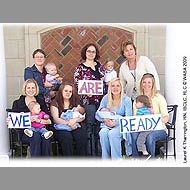
Congratulations to the winners of the WBW Photo Contest and all those who took part in the competition. Winning photos are featured in WABA's 2009 Action Folder and other promotional materials.
1. Laurel K.Tharrington.
Photo: Everyone needs to be ready and prepared for emergencies
2. Sudipto Das.
Photo: Breastfeeding during heatwave
3. Sudipto Das.
Photo: Hard World -Breastfeeding in a relief camp in India
4. Asha D Benakappa. Photo: Domestic Violence as Unforeseen Emergencies
5. Sarah Segal.
Photo: Brestfeeding Baby Next to Armed Soldier on bus in Israel
6. Ruth Babirye.
Photo: Code Monitoring in Emergencies
7. Ruth Babirye.
Photo: Breastfeeding: Hope before Help
8. Roseane do Socorro Goncalves Viana.
Photo: Breastfeeding, the First Rigth to Food
9. Grace Nambuusi.
Photo: Breastfeeding mother in Karamoja – Region under Emergency situation in Uganda
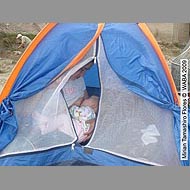
10. Mirian Tamashiro Flores.
Photo: Breastfeeding after one year of Ica’s earthquake in Peru
Breastfeeding: A Vital Emergency Response. Are you ready?
WORLD BREASTFEEDING WEEK 2009WHO is pleased to join the World AIliance for Breastfeeding Action in celebrating World Breastfeeding Week from 1 to 7 August 2009. This year's theme stresses the importance of breastfeeding as alife-saving intervention, especially during emergencies.
Emergencies - whether caused by conflict or natural disasters - are extraordinary events that can jeopardize the health and survival of large populations. Children are among the most vulnerable groups during emergencies, and small children are the most vulnerable of all, as they face a triple risk of death from diarrhoeal disease, pneumonia and undemutrition.
Breastfeeding during emergencies saves lives
The life-saving role of breastfeeding during emergencies is firrnly supported by evidence and guidance. The Global Strategy for Infant and Young Child Feeding outlines actions to improve infant and young child feeding in emergencies. In all situations, the best way of preventing malnutrition and mortality among infants and young children is to ensure that they start breastfeeding within one hour of birth, breastfeed exelusively (with no food or liquid other than breast mil k, not even water) until six months of age and continue breastfeeding with appropriate complementary foods up to two years or beyond. Even in emergency situations, the aim should be to create and sustain an environment that encourages frequent breastfeeding for children up to at least two years of age.
Protect and support breastfeeding
Unfortunately, a widespread misconception assumes that stress or inadequate nutrition, commonly seen during emergencies, can compromise a mother's ability to breastfeed successfully. News stories from devastated areas often inelude reports of mothers who have given birth and are "not producing enough breast milk". During ernergencies, unsolicited or uncontrolled donations of breast-milk substitutes may undermine breastfeeding and should be avoided. Instead, the focus should be on active protection and support of breastfeeding by, for example, establishing safe "corners" for mothers and infants, one-to-one counselling and mother-to-mother support.
As part of emergency preparedness, hospital s and other health care services should have trained health workers who can help mothers establish breastfeeding and overcome difficulties. The Baby-friendly Hospital Initiative and the WHOIUNICEF Breastfeeding Counselling: A training course may be included in emergency preparedness plans. The Infant Feeding in Emergencies Core Group, which involves a range of partners including WHO, has developed Operational Guidance for Emergency Relief Staff and Programme Managers, which provides concise and practical guidance on how to ensure appropriate infant and young child feeding in emergency preparedness and response. The Operational Guidance reflects the WHO Guiding Principies for feeding infants and young children during ernergencies, and has integrated the International Code of Marketing of Breast-milk Substitutes to highlight the problem of donations of breast milk substitutes, bottles and teats in emergencies.
The theme of World Health Day 2009 was Save Uves: make hospitals safe in emergencies. I am pleased that this year's breastfeeding week builds upon this theme and extends it with actions in the community. Emergencies amplify the risk of infant and young child mortality. With appropriate action, we can protect these precious lives through (me of the most "natural" of all life-saving interventions.Dr Margaret Chan Director -General
World Breast Feeding Week August 2009
Support for Breast Feeding from The International Pediatric AssociationAcknowledging the 2009 Breast Feeding Week, the International Pediatric Association (IPA) reinforces its commitment to promote breastfeeding by all women from all countries and socioeconomic groups, and in all circumstances including times of disaster and emergency as highlighted by the theme “Breastfeeding is a Vital Emergency Response”. IPA is committed to the protection and promotion of health for all children everywhere. We address this goal by fostering best practices which enhance child health, practises based on sound scientific reasearch and evidence based experience. IPA acknowledges that breast milk is the most critical nutritional need for all infants. Ideally breastfeeding should be “exclusive” for 6 months and continued with complementary foods as appropriate to the mother’s circumstances, generally encompassing a period of 18 to 24 months. Feeding of infants by mothers infected with HIV has been an area of particular concern. When mothers in developing countries avoid breastfeeding to prevent HIV transmission to their infants, their infants are at risk for growth retardation, malnutrition, diarrhea, and death from causes other than HIV infection. Accumulating scientific evidence indicates that appropriate diagnosis and treatment of HIV infected mothers and their infants can not only preserve maternal health, but also prevent mother to infant transmission of infection in nearly all instances.
Unfortunately, promotion of breast feeding worldwide continues to be undermined by the unrestrained marketing of formula milks by their manufacturers in violation of the Code of Marketing of Breast Milk Substitutes, the international document adopted by the 1981 World Health Assembly and formally signed and implemented by many of the world’s countries. IPA has been concerned for years that the prominent public image of manufacturers of infant foods implies a relationship with the profession of pediatrics which compromises the IPA commitment to promotion of breastfeeding. In 2007 at its triennial meeting, the IPA Council of Delegates resolved unanimously that the IPA fully subscribe to the Code and encourage its Member Societies to do the same. The IPA remains firmly committed to these principles.
IPA has been concerned by a number of recent articles in the lay press (including the London Times, Atlantic Monthly, and New York Times) indicating that breast feeding can be inconvenient for mothers and that the scientific evidence for superiority of breast milk to any known artificial formula is weak. We note that available evidence for the superiority of breast milk is backed by sound scientific studies. We recognize that some mothers are unable to or unwilling to breast feed, and advise that each mother be presented with the best available evidence on infant feeding and encouraged to make her informed choice on how best to feed her baby. Noting that many mothers must return to work during the 6 month recommended period of “exclusive” breast feeding; we support efforts to achieve national policy regulations which address this difficult issue.
IPA congratulates WABA and its partners on the annual promotion of Breast Feeding Week. Our IPA motto is Healthy Children for a Healthy World. The best start for a healthy life for each and every child begins with exclusive breast milk feeding for the first 6 months of life. We look forward to a world where this is possible for all of the world’s mothers and children.Chok-wan Chan, President Jane G. Schaller, Executive Director Zulfiqar Bhutta, H. M. Coovadia, Ricardo Uauy , IPA Technical Advisors
Promoting proper feeding for infants and young children
The challenge WHO/NHD
Malnutrition is responsible, directly or indirectly for about one third of deaths among children under five. Well above two thirds of these deaths, often associated with inappropriate feeding practices, occur during the first year of life.
Nutrition and nurturing during the first years of life are both crucial for life-long health and well-being. In infancy, no gift is more precious than breastfeeding; yet barely one in three infants is exclusively breastfed during the first six months of life.
The response
The World Health Organization recommends that infants start breastfeeding within one hour of life, are exclusively breastfed for six months, with timely initiation of adequate, safe and properly fed complementary foods while continuing breastfeeding for up to two years of age or beyond.
Promoting sound feeding practices is one of the main programme areas that the Department of Nutrition for Health and Development focuses on. Activities include the production of sound, evidence-based technical information, development of guidelines and counselling courses, production of appropriate indicators and maintenance of a Global Data Bank on Infant and Young Child Feeding.
Work is focusing on the following areas
:: Baby-friendly Hospital Initiative
:: Complementary feeding
:: Exclusive breastfeeding
:: Feeding in Exceptionally Difficult Circumstances
:: Global Strategy for Infant and Young Child Feeding
:: International Code of Breast-milk SubstitutesBreastfeeding
Breastfeeding is the normal way of providing young infants with the nutrients they need for healthy growth and development. Virtually all mothers can breastfeed, provided they have accurate information, and the support of their family, the health care system and society at large.
Colostrum, the yellowish, sticky breast milk produced at the end of pregnancy, is recommended by WHO as the perfect food for the newborn, and feeding should be initiated within the first hour after birth.
Exclusive breastfeeding is recommended up to 6 months of age, with continued breastfeeding along with appropriate complementary foods up to two years of age or beyond.Sources:
http://www.who.int/mediacentre/events/annual/world_breastfeeding_week/en/index.html
http://worldbreastfeedingweek.org/
http://worldbreastfeedingweek.org/worldwide.htm
http://worldbreastfeedingweek.org/images/who_letter_of_support.pdf
http://worldbreastfeedingweek.org/images/BF_Statement_Final.pdf
http://www.who.int/nutrition/topics/infantfeeding/en/index.html
http://www.who.int/topics/breastfeeding/en/index.html